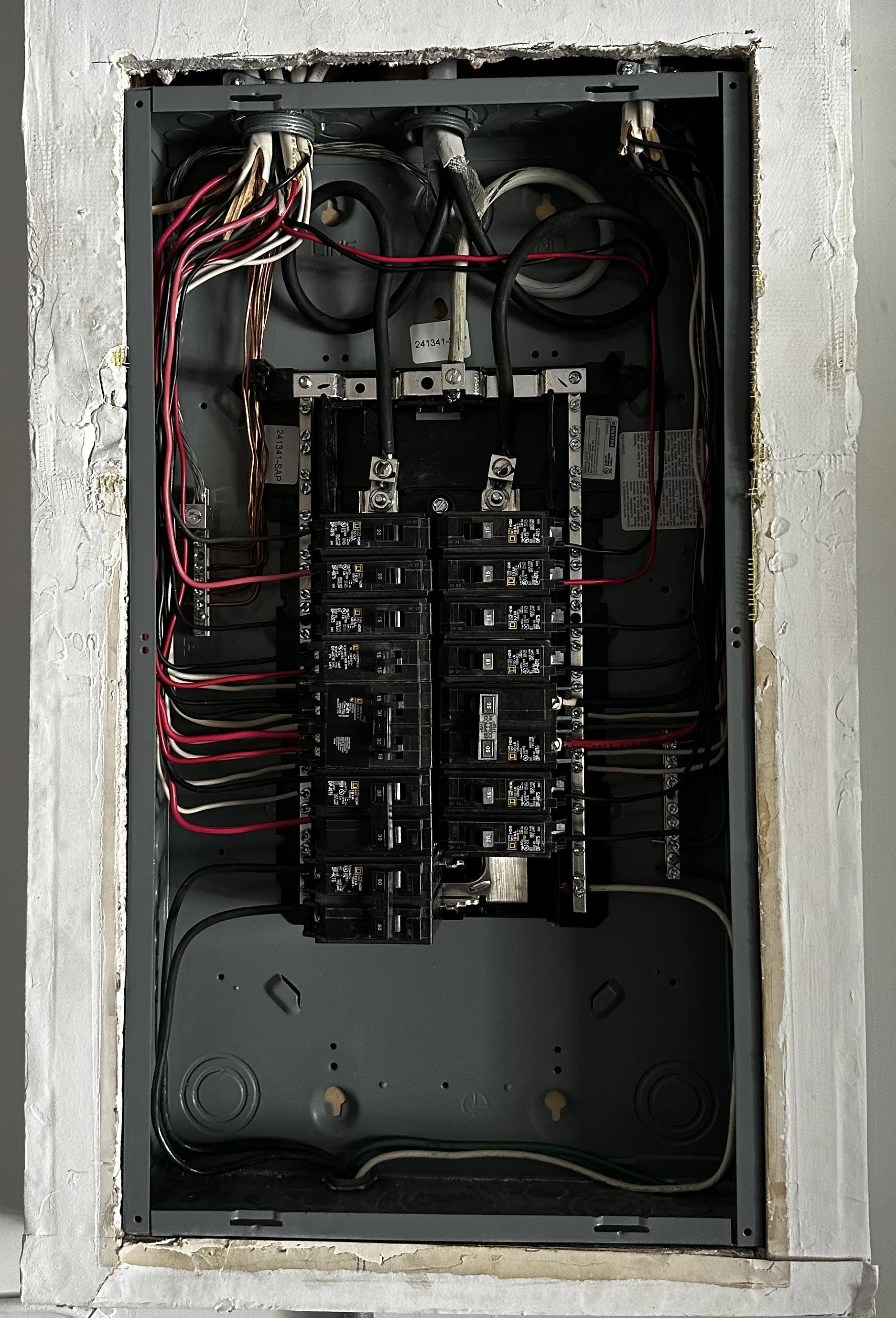
If your electrical panel is tripping breakers, showing signs of wear, or you're planning an addition that needs more power, you're facing one of three options: a repair, an upgrade, or a full replacement. The right call depends on the age of your panel, its amperage, and what's actually going wrong, not on which option costs more or less. A qualified electrician should always diagnose the specific issue first, since guessing at a panel's condition from the outside is how homeowners end up either overpaying for an unnecessary replacement or underinvesting in a genuine safety issue.
What's the Difference Between Repair, Upgrade, and Replacement?
A panel repair addresses a specific failed component, a bad breaker, a loose connection, a damaged bus bar, without touching the rest of the system. A panel upgrade increases your home's electrical capacity, typically moving from 100 amps to 150 or 200 amps, to support added demand like an EV charger, a hot tub, or a home addition. A panel replacement swaps the entire panel, usually because it's outdated, unsafe, or a brand with a known failure history, regardless of whether more capacity is needed.
Common Signs Your Panel Needs Attention
Frequent breaker trips. Occasional trips are normal under heavy load. Frequent, unexplained trips point to a failing breaker or a panel struggling to handle your home's actual demand.
Warm or discolored panel covers. Heat and discoloration around breakers or the panel itself are signs of a loose connection or overloaded circuit, and should be looked at promptly.
Flickering lights across the house. If it's happening in multiple rooms rather than one fixture, the panel itself is often the source rather than the light fixture.
A fuse box instead of breakers. Homes with an original fuse box are almost always candidates for full replacement, since fuse boxes can't support modern electrical demand safely.
Outdated panel brands. Certain older panel brands, including some Federal Pacific and Zinsco models, have documented failure rates that make repair impractical regardless of current symptoms. A licensed electrician can tell you if your panel is one of them.
Planning an addition, EV charger, or major appliance. Added electrical demand is one of the most common reasons for an upgrade, even when the existing panel is functioning normally today.
How Electricians Decide Between the Three Options
The diagnostic visit answers the real question: is this panel safe and adequate for your home's actual electrical needs. If a single component has failed and the panel is otherwise a known-safe brand with adequate capacity, a repair is usually the right call. If the panel is functioning safely but doesn't have enough capacity for what you're adding, an upgrade solves the specific problem without full replacement. If the panel is outdated, unsafe, or from a brand with known issues, replacement is the honest recommendation regardless of what else is going on.
Chase Electric technicians walk you through which of these applies to your panel and why, before any work begins.
What a Panel Upgrade Typically Involves
Most residential upgrades move a home from 100 amps to 150 or 200 amps. This usually requires a new panel, updated breakers sized to the new capacity, and coordination with your utility provider for the service connection. If you're adding an EV charger, a 200 amp panel is generally the safer long-term choice even if your current needs are smaller, since retrofitting again later costs more than sizing correctly the first time.
Why This Comes Up So Often in Pleasanton and the Tri-Valley
Much of the housing stock across Pleasanton, Walnut Creek, Dublin, and the surrounding Tri-Valley was built with 100 amp panels that were adequate decades ago but weren't designed for today's electrical demand, EV chargers, home offices with more equipment, and larger HVAC systems all draw more power than a typical home used in the 1980s or 90s. That's the most common reason panel questions come up now, not because something is necessarily broken, but because home electrical needs have grown.
Frequently Asked Questions
How do I know if my panel needs a repair or a full replacement?
It comes down to what's actually wrong and how old and capable the panel is. A single failed component in an otherwise safe, adequate panel usually points to a repair. A panel that's outdated, from a brand with known failure issues, or simply undersized for your home's electrical demand points to replacement or an upgrade. A diagnostic visit from a licensed electrician is the only reliable way to know which applies to your home.
How much amperage does my home actually need?
Most modern homes are comfortable with 150 to 200 amps, especially if you have or plan to add an EV charger, a hot tub, or significant home office equipment. Older homes with 100 amp panels aren't necessarily unsafe, but they often can't support added demand without an upgrade. An electrician can evaluate your home's actual usage and future plans to recommend the right size.
Are Federal Pacific or Zinsco panels dangerous?
These brands have documented histories of breakers failing to trip properly under overload conditions, which is a real safety concern regardless of whether your panel currently seems to be working fine. If you're not sure what brand your panel is, a licensed electrician can identify it during an inspection and explain your options.
Can I add an EV charger to my existing panel, or do I need an upgrade first?
It depends on your panel's current capacity and what else is drawing power in your home. Many 100 amp panels can't support a Level 2 EV charger alongside existing demand without an upgrade. A load calculation during your estimate will tell you definitively whether your current panel can handle it.
How long does a panel upgrade or replacement take?
Most residential panel upgrades or replacements are completed in a single day, though your power will be off for part of that time while the work is done. If utility coordination is required for the service connection, that can add a day depending on scheduling. Your electrician will walk you through the expected timeline during your estimate.
Do I need a permit for a panel upgrade or replacement?
Yes. Panel work almost always requires a permit and inspection in California, since it involves your home's main electrical service. Chase Electric handles the permitting process as part of the job, so you don't have to navigate it yourself.