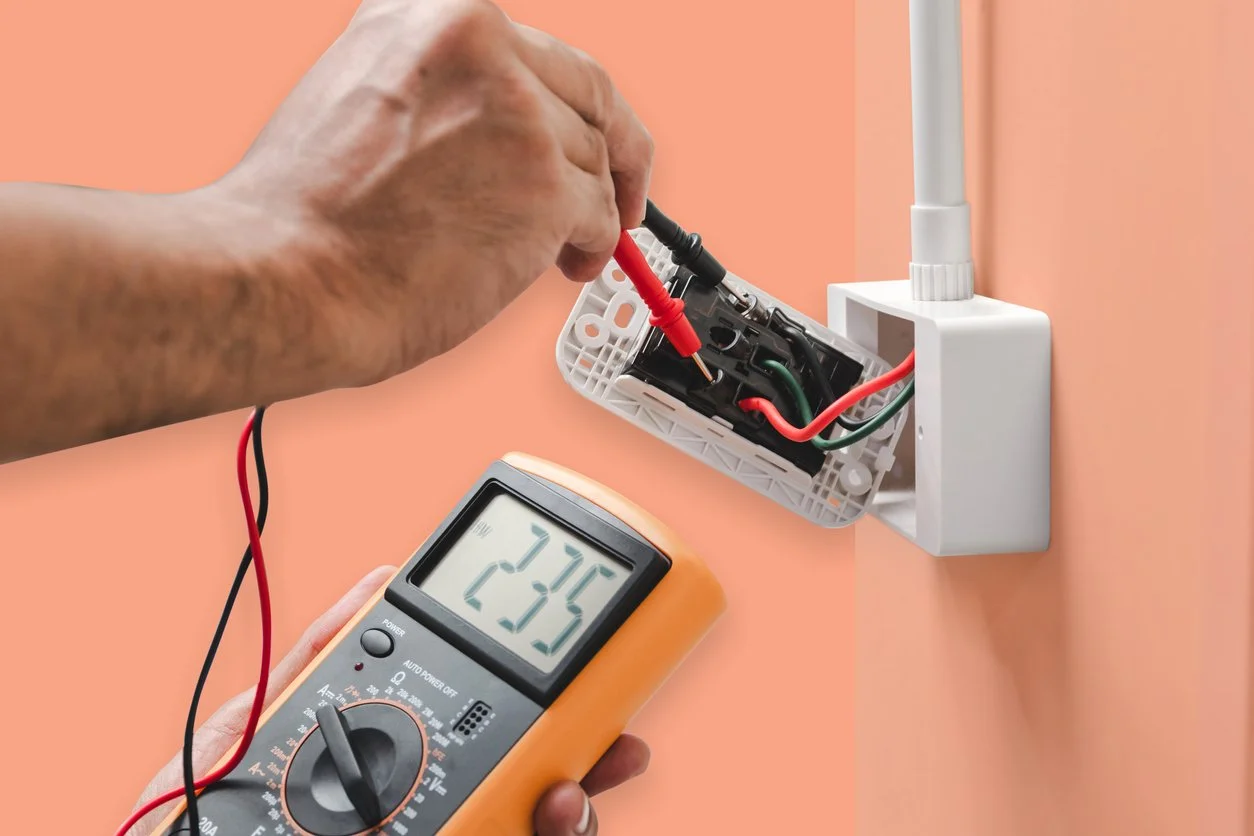
Most electrical problems fall into a handful of familiar categories: a dead outlet, a breaker that won't reset, a flickering light, or a switch that's stopped responding. Some of these are minor and safe to leave for a scheduled visit. Others are a sign of something more serious happening behind the wall, and knowing the difference is what keeps a small problem from becoming a bigger one.
Dead or Unresponsive Outlets
A single outlet that's stopped working is often just the outlet itself, a worn connection or a failed internal component. It's usually not urgent, but it shouldn't be ignored either, since outlets rarely fail without a reason. If more than one outlet on the same wall or room stops working at once, that points to something further upstream, often a tripped breaker or a wiring issue feeding that circuit.
Breakers That Trip Repeatedly
An occasional trip under heavy load, running a space heater and a hair dryer at the same time, for example, is normal. A breaker that trips repeatedly without an obvious cause is not. This usually means the circuit is overloaded, a component inside the breaker has failed, or there's a short somewhere in the wiring it protects. Resetting it and moving on is the wrong move here. A licensed electrician can trace the actual cause instead of guessing.
Flickering or Dimming Lights
If it's happening at a single fixture, the bulb or the fixture itself is the likely cause. If it's happening across multiple rooms or the whole house, especially when a major appliance kicks on, that's often a sign of a loose connection at the panel or a service issue that needs a professional look. This is one of the more common reasons Pleasanton homeowners call us for a diagnostic visit.
Warm, Buzzing, or Discolored Outlets
This one is always worth calling a professional for. Heat, buzzing, or visible discoloration around an outlet or switch usually means a loose connection or an overloaded circuit, and both are fire risks if left alone. Turn off and avoid using the outlet until it's been inspected. This isn't a wait-and-see situation.
Ceiling Fans and Light Fixtures That Stopped Working
Often a simple fix, a failed capacitor in the fan motor or a bad connection at the fixture box. Occasionally it points to a wiring issue in the box itself, particularly in older homes where fixture wiring wasn't updated to current standards. Either way, it's usually a quick, affordable repair once diagnosed correctly.
GFCI and AFCI Outlets That Won't Reset
These outlets are designed to trip for a reason, they're protecting you from a ground fault or arc fault. If one won't reset at all, that typically means the outlet itself has failed, or there's an active fault on the circuit it's protecting. Either way, this isn't something to bypass or ignore.
What You Can Safely Check Yourself
Before calling an electrician, it's reasonable to check a few basics: make sure the breaker for the affected area hasn't tripped, confirm a GFCI outlet upstream hasn't tripped and cut power to other outlets on the same circuit, and check whether a bulb, not the fixture, is the actual problem. Beyond that, opening a panel, working on wiring, or troubleshooting anything involving heat, sparking, or burning smell is where a licensed electrician should take over.
When It's Time to Call a Professional
Some signs mean it's time to stop troubleshooting and call: repeated breaker trips, warm or discolored outlets, burning smells, visible sparking, or any issue affecting multiple rooms at once. None of these get better on their own, and each one carries real safety risk the longer it's left alone.
Chase Electric technicians diagnose the actual cause before recommending any repair, so you know exactly what's wrong and what it takes to fix it, whether that's a simple outlet swap or something further upstream in your home's wiring.
Frequently Asked Questions
Is it safe to reset a breaker myself if it trips?
Resetting a breaker once, after an obvious cause like running too many appliances at once, is generally safe. If it trips again shortly after, or trips repeatedly without an obvious reason, stop resetting it and call an electrician. Repeated tripping is the breaker doing its job to protect the circuit from a real problem.
How do I know if an electrical problem is an emergency?
Burning smells, visible sparking, smoke, or a breaker that trips immediately every time it's reset are all signs of an emergency that need attention right away. A single dead outlet or a flickering light in one room usually isn't urgent, but it shouldn't be ignored indefinitely either.
Why do my lights flicker when a large appliance turns on?
This often points to a loose connection somewhere between the panel and the affected circuits, sometimes at the panel itself, sometimes further along the wiring. It can also indicate the panel doesn't have enough capacity for your home's actual electrical demand. A diagnostic visit will identify which one applies to your home.
Can I replace an outlet or switch myself?
Simple, straightforward swaps are within reach for some homeowners who are comfortable working with electricity, but any work involving GFCI or AFCI outlets, older wiring, or a circuit that's already shown a problem is safer left to a licensed electrician. Incorrect wiring on even a simple outlet can create a real safety hazard that isn't obvious until something fails.
How much does a typical electrical repair cost?
Cost depends entirely on what's actually wrong, a simple outlet swap and a wiring issue further upstream are very different jobs. Chase Electric always diagnoses first and provides a clear estimate before any repair begins, so you know the cost before committing to the work.
Do repeated electrical problems in an older home mean I need rewiring?
Not necessarily. Many issues in older Pleasanton homes are isolated and fixable without a full rewire. But if problems keep recurring across multiple circuits, or the home still has its original wiring from several decades ago, a whole-home evaluation is worth having so you know whether isolated repairs are still the right call or a larger update makes more sense.